
Contents
- 1 Comparison of Best Pellet Stoves (By Experts)
-
2 What To Look For Before Buying A Pellet Stove?
- 2.1 Types of Pellet Stoves Available in the Market
- 2.2 What Should be the Stove Size?
- 2.3 Where to Place the Pellet Stove?
- 2.4 The Burning Material (and Why Burning Pellets Is Best)
- 2.5 Maintenance Tips for Pellet Stoves
- 2.6 Easy steps to Pellet Stove Installation
- 2.7 Safety Tips to Consider When Using a Pellet Stove
-
3 List of Best Pellet Stoves (Based on Consumer Reviews)
- 3.1 1. Castle 12327 Serenity Wood Pellet Stove – Works With a Convenient Remote
- 3.2 2. Pelpro PP130-B Pellet Stove – Works With Three Heat Settings
- 3.3 3. US Stove GW1949 Wiseway Pellet Stove – Works With Its Thermometer
- 3.4 4. Pleasant Hearth Large Pellet Stove – Enough Power While Still Being Efficient
- 3.5 5. Comfortbilt Pellet Stove HP22-50,00 BTU – Works With Full Control
- 3.6 6. Vogelzang VG5790 Hopper Pellet Stove – Add More Pellets
- 3.7 7. Magnum Classic Matte Black Little Rascal Wood Pellet Stove – Heavily Efficient
- 4 Wood Stoves vs. Pellet Stoves
- 5 FAQs
- 6 Conclusion
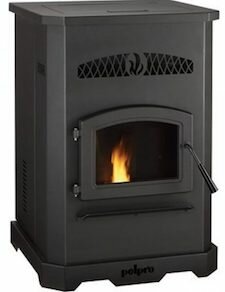
Our Top Pick : Pelpro PP130-B Stove
Our top pick is Pelpro PP130-B for the best pellet stove in this guide. The extensive amount of coverage produced by the pellet stove ensures that your stove will keep on working well for most of the needs you have.

Comparison of Best Pellet Stoves (By Experts)
| Products | Name | Features | Buy |
|---|---|---|---|

|
Castle 12327 Serenity Wood Pellet Stove |
|
|

|
Pelpro PP130-B Pellet Stove |
|
|

|
US Stove GW1949 Wiseway |
|
|

|
Pleasant Hearth Large Pellet Stove |
|
|

|
Comfortbilt Pellet Stove HP22 |
|
|

|
Vogelzang VG5790 Hopper Pellet Stove |
|
|
|
Magnum Classic Matte Black Little Rascal Wood Pellet Stove |
|
List of Best Pellet Stoves (Based on Consumer Reviews)
- Pelpro PP130-B Pellet Stove: Best Overall
- Castle 12327 Serenity Wood Pellet Stove: Best For Small Spaces
- US Stove GW1949 Wiseway Pellet Stove: Best Value for your Money
- Pleasant Hearth Large Pellet Stove: Best for Large Spaces
- Comfortbilt Pellet Stove HP22-50,00 BTU: Best for Digital Control
- Vogelzang VG5790 Hopper Pellet Stove: Best for Ease of Operation
- Magnum Classic Matte Black Little Rascal Wood Pellet Stove: Best in Compatibility
1. Castle 12327 Serenity Wood Pellet Stove – Works With a Convenient Remote
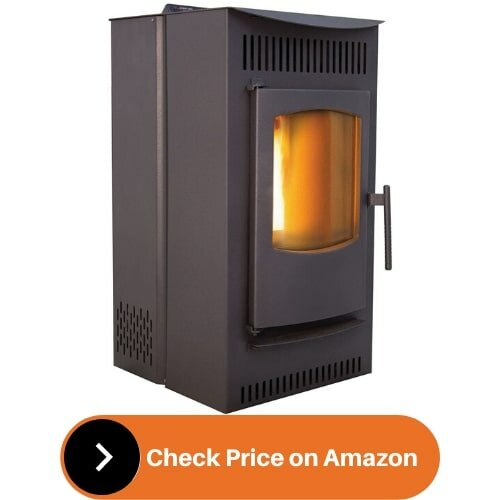
On cold nights, the castle serenity pellet stove is one way to heat your home in style. This efficient pellet stove is an attractive piece that would fit seamlessly with most contemporary design in your home.
Yes, it needs to be said twice; they are efficient. The product is second to none, so you don’t need to add heaters to every room within your apartment. With a 78 percent efficiency, it consumes less energy and generates more energy than most conventional heaters.
The size allows it to retain the heat within your apartment. The stove is designed with a blower, which serves the purpose of heat distribution, although this feature calls for constant maintenance to reduce the risk of fire outbreak.
The Smart Controller feature is the best part of this pellet stove. The controller lets you adjust the settings by time. The calendar-based heating option enables you to control how well the furnace works at certain times, especially when your room’s atmosphere gradually changes. The simplistic interior design makes it easy to clean and maintain.

Pros
- Simple cleaning setup
- The controller offers a simple design
- Silent in operation

Cons
- Weighs approximately 200 pounds
- The intensity adjustment takes time.
2. Pelpro PP130-B Pellet Stove – Works With Three Heat Settings
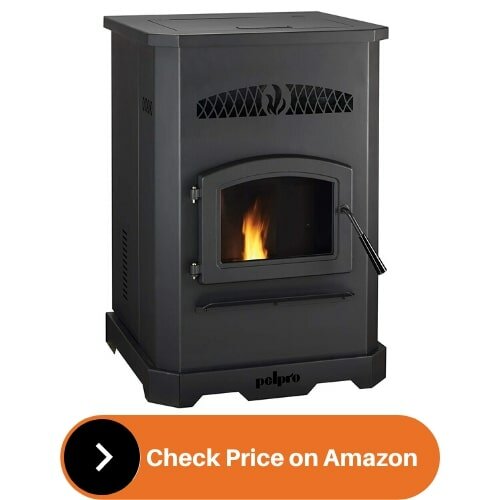
Here, we like to think we are giving our readers the best possible option, so we would like to place a priority on efficiency. The pelpro PP130 is highly efficient. An 81.6 efficiency rate implies that you will be saving more from your electrical bills.
This efficiency rate makes this device great for the environment and helps you save more by cutting off excess electrical bills. The device comes with three different heat settings. The pelpro is better as it serves as a perfect alternative compared to most wood pellet heater.
You can use the knob on the side to adjust the settings. The knob does not turn hot when the stove is on; this allows you to configure the heat setting while the furnace is still working.
The fan uses a variable speed setting. The system distributes heat evenly across the entire room without making some part feel stuffy or cramped. At about 130 pounds, the Pelpro stove is relatively light in weight when compared with most models. This device is worth checking out because of its efficiency. It economical and helps you save more.
Pros
- Durable
- Distribute heat evenly.
- Artistic design
Cons
- The knob control is hard to figure out
- It produces an invisible flame.
3. US Stove GW1949 Wiseway Pellet Stove – Works With Its Thermometer
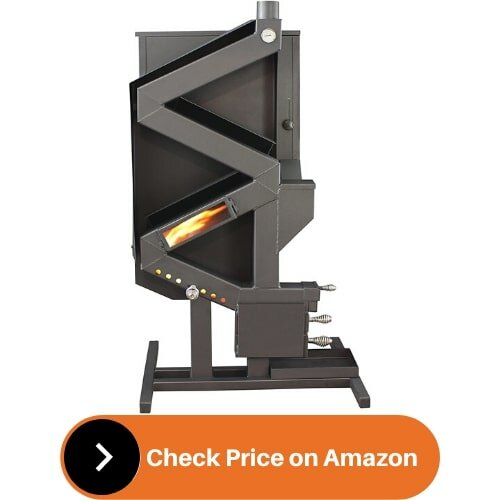
The GW 1949 wise way pellet stove is incredible because you can use them without electricity.
They are manual and use gravity to run. Being a high-quality EPA certified and UL listed manually operated wood pellet heater, it is as good for the environment and pocket-friendly.
The GW1949 is one simple device. They are fool-proof, So you don’t worry about the non-automatic or a non-electronic device giving you the heebie-jeebies on usage. All you need to do is to heat the chamber, and you’re good to go!
The thermometer gives you an added advantage; it works with the US Stove model and helps you identify the rate at which the stove is working.
The 60-pound hopper lasts for a while. You can get this working for 36 consecutive hours when you fill it all the way. A three-inch pellet vent is used to help you add the wood pellets with enough room.
The natural gravity-fed system is an essential part of the stove. The feed setup allows the wood pellets to move down towards the burner naturally. The design reduces the need for maintenance and ensures pellets are burned completely.
Pros
- The hopper weighs about 60 pounds, thus making it a lightweight model
- Quick installation
- Very durable
- Economical
Cons
- Requires extensive cleaning after the pellet tray is empty
- complicated design.
4. Pleasant Hearth Large Pellet Stove – Enough Power While Still Being Efficient
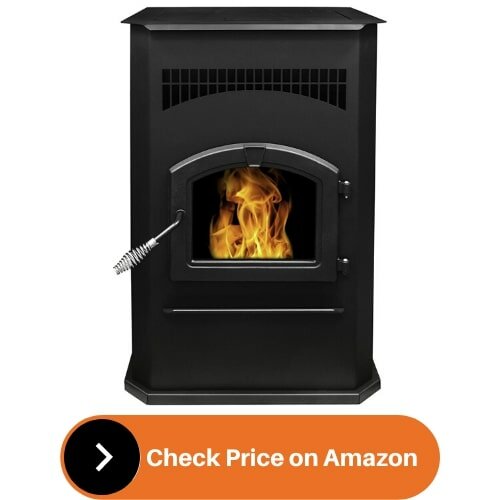
The pleasant hearth large wood pellet is the “one” stove for indoor heating. It is compatible with a single-family or portable home usage and requires very little assembling.
You don’t have to sacrifice the power in your heater for efficiency when using this stove. The stove uses a large body that can handle 50,000 BTUs of energy while still working with 85 percent efficiency rating.
The large heat unit area measures up to 2,200 square feet. The layout works with an 80-pound hopper, while the model can burn for about 46 hours. This can work for at least 16 hours when used on maximum heat settings.
The design also lets you operate this continuously on a minimum or maximum setting, giving you more control over how well the furnace heats your home. You can even use an outside air kit with this model.
The included feature lets you adjust how the installation handles external heat.
The blower is built inside the unit, and The blowers’ interior body allows heat to be distributed evenly.
Pros
- Offers more space for heat
- Simple control mechanism
- The classic design comes with a small tuner for adjusting the heat level.
Cons
- It takes a bit for the heater to reach its fullest setting
- Large body size.
5. Comfortbilt Pellet Stove HP22-50,00 BTU – Works With Full Control
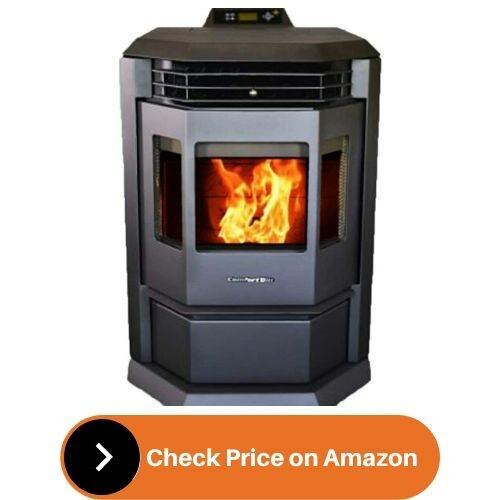
You gain more control over your home temperature as you use the Comfortbilt pellet stove. The digital control panel works with electrical power. They are not a ventless pellet stove and need to be linked with a ventilation system; this process makes installation a bit complex.
The digital display allows you to control the heat setting on the stove. The product is linked to a programmable thermostat for easy control.
It can be daunting for people to buy a pellet stove as they usually are put off by assuming that they will have to install pellet stoves for each room in their home. Let’s burst your bubble and be straightforward. “no, you don’t have to go through that!”.
The five heat settings on this model help you to produce enough heat to saturate your entire home. This system is strong and durable; the hopper can hold as much as fifty-five pounds weight.
Pros
- Offers more control.
- Offers a quick response to control
- It comes with a flame view area.
Cons
- Takes a bit to install
- It requires an extra bit of time to get out of standby mode.
6. Vogelzang VG5790 Hopper Pellet Stove – Add More Pellets
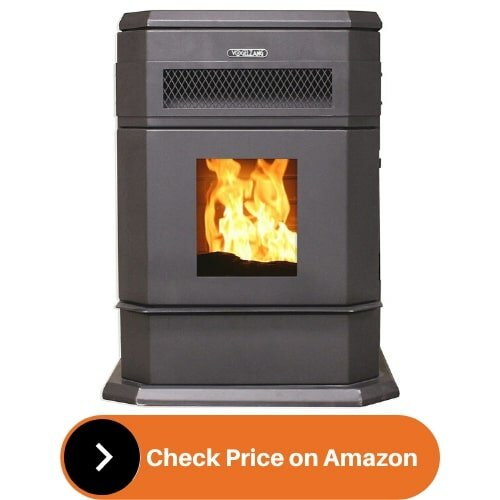
You can get a large number of pellets added into this Vogelzang stove. This great pellet stove is capable of carrying at much as 120 pounds of pellets. The hopper offers a simple design that lets you quickly load and clear out pellets.
The LED display on the top part of the model lets you review the stove’s specific heat setting. This is accompanied by a thermostat that displays the amount of heat produced within the model.
The steel body gives this model a rigid look and makes the device resistant to wear or warp. You can use this pellet stove in many spots; it’s also mobile home-approved.
It can be safely placed in an American-made mobile home and can work without threatening anything inside the vehicle. If this paragraph doesn’t sell it, then its large heating capacity should!
Pros
- Large heating capacity for.
- The simple LED display is easy to read.
- The fans operate well inside the unit.
Cons
- Very heavy
- It takes a while to install.
7. Magnum Classic Matte Black Little Rascal Wood Pellet Stove – Heavily Efficient
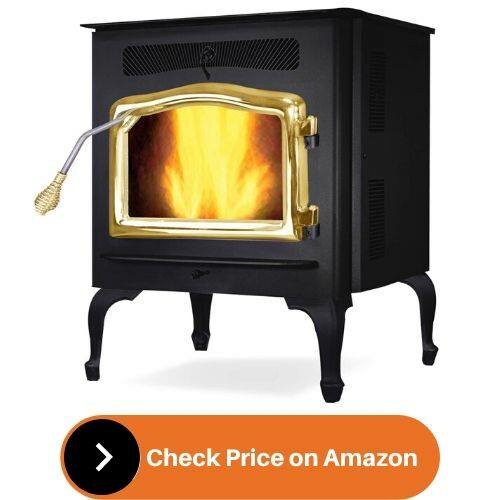
This is indeed a little rascal. There is no way we could have omitted this fantastic piece from our list. The little rascal offers an auto-ignition with five different heat settings.
The physical design comes with a distinct door that features a gold-plated accent. The magnum classic is designed to add a touch to your home décor with convenience in mind.
A small handle protrudes to add a personality and a touch of carelessness. The handle is far apart to keep the surface from becoming too hot or uncomfortable when the rest of the stove is working.
You’ll also appreciate the aesthetic tranquility and warmth the stove brings to your home. The striking black and gold appearance adds a jaw-dropping effect to anyone that beholds it.
Few brushed nickel accents also add a bit of extra detail all around. Here is the center of attention when it is cold outside and the warm inside– while you grab a coffee and having a chat with a loved one on a cozy sofa.
Pros
- It produces heat rapidly
- It produces consistent heat
- The door adds a classy touch and mixes well with the base.
Cons
- Weighs nearly 300 pounds
- The motor can produce lots of noise.
Wood Stoves vs. Pellet Stoves
Both products offer the same function, but their efficiency varies. Here are some points to note and spot some of the major differences between the wood stove and a pellet stove.

Heating medium
A pellet stove is different from a wood stove based on the heating medium. Pellet stoves burn pellets and create heat. Conversely, wood stoves use wood materials.
Cleaning
Due to a major advancement in technology, pellet stoves are more organized and easy to clean.
Heat production
You can easily predict and control the degree of heat produced by the pellet stove. This feature is different from a wood stove that is designed to produce more heat with less control.
Cost
Pellet stoves are less expensive and range from $1,500 to $3,000. On the other hand, wooden stoves are more expensive and range from $4,000 or more.
Emissions
Pellet stoves, when compared to most traditional wood-burning stoves, tend to be more efficient. They are more efficient than the wood model that doesn’t have EPA certification.
Safety
Safety is key once you’re on with either the traditional or a contemporary designed stove. But you stand a better chance to be on the safer side if you’re using a pellet stove because it’s easy to maintain and produces less fume.
Great article.
I am looking for a pellet stove I can tie in or vent to other nearby rooms. Which model is best?
Thanks, John!
You can go for Pleasant Hearth Large Pellet Stove or Pelpro PP130 Pellet Stove. These are the best option for multi rooms heating.