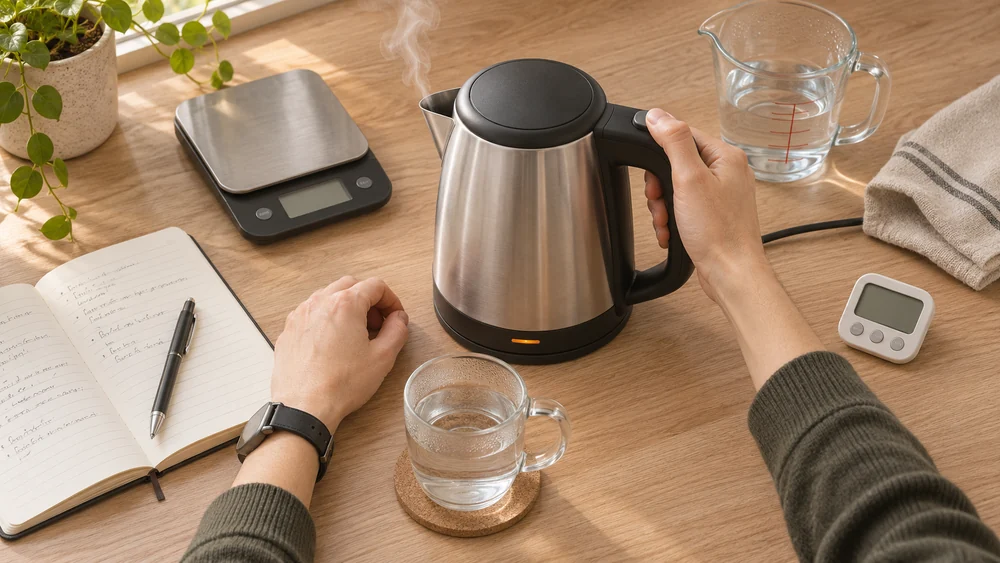
An electric kettle can look perfect online until you try to open its lid under a low cabinet. That’s the kind of detail shoppers hope to find in a review. If you’re learning how to write product reviews, start with a task the reader does often. Try it yourself and explain what happened. The same idea applies to digital services. When covering an online casino such as gamblerina casino, a reviewer can explain which parts of the site they checked on a phone and which features their review covers.
Start with the buying decision
Imagine a shopper with two kettles open in separate tabs. They already know the price of each. What they need from you is a reason to choose. Someone who drinks one cup of tea at a time may want to know how little water each kettle can heat. A family making breakfast might care more about how many mugs they can fill before they need to boil another batch.
Read a few customer questions before deciding what to test. If shoppers keep asking whether the lid hits the cupboard, measure how high it opens. If they want to know whether they can read the water gauge with their left hand, pick up the kettle that way and check. Use questions like these to plan tests that match the way people use the product.
| Buyer | What matters | What to check |
|---|---|---|
| One-cup tea drinker | Small batches | Water needed to reach the minimum line |
| Shared household | Several rounds of drinks | Time needed to refill and boil again |
| Small kitchen | Room under the cabinet | Clearance with the lid fully open |
| Left-handed user | Easy handling | Comfort of grip and visibility of gauge |
Show what you actually tested
If you want to know how to write effective product reviews, keep a record as you go. To compare heating times, fill both kettles with the same amount of water at the same starting temperature. Time each from the flip of the switch until it shuts off. Run the test again under the same conditions. If the times vary, report the range and say how many runs you made.
Write things down while they’re fresh. A photo can help you remember where the handle sits, but a note about how it felt with a full kettle will be more useful when you draft the review. A small test log is enough if it covers the details you’ll need later.
- The model number or version on the unit.
- Whether you bought, borrowed, or received it.
- The task you tried and how often you tried it.
- The amount of water and the starting temperature, when relevant.
- What you observed and what you still need to check.
A week with a kettle can tell you whether the opening is wide enough for the brush you use. To judge how the hinge wears, you’ll need more time. The same care applies to reviews based on research. Name the source of a measurement if it came from a manual, and say which details you checked yourself.
Describe the test in enough detail for readers to judge how closely it matches their own routine.
Make the trade-offs easy to compare
Learning how to write compelling product reviews gets easier when you describe what each option is like to use. Say two kettles heat at about the same speed. One has a narrow spout that helps you aim into a small mug. The other has a wide lid that gives your brush room to reach the base. Describe those differences in terms of a morning cup of tea or the cleanup that follows.
Give each model the same test so readers can compare the results. Use consistent units and keep the table focused on the jobs the products are meant to do. If one model costs more, point to what the difference in price buys. A lid that opens with one hand could be worth paying for if the reader often refills the kettle while holding a mug.
| Feature | Fair comparison | Why the reader cares |
|---|---|---|
| Heating time | Match water volume and temperature | Estimate how long to wait for a cup |
| Pour control | Use the same fill level and mug | See how easy it is to aim the stream |
| Cleaning access | Try the same brush in both | Check if the bristles reach the base |
| Storage | Try the same shelf or worktop | Check whether the unit fits where it will live |
How to write affiliate product reviews
Settle on your recommendation before you add retailer links. If you earn a commission when someone buys through a link, explain that in plain language close to the recommendation and link. Tell readers if the brand provided the sample or paid for the review, where applicable. The U.S. Federal Trade Commission explains how to make these relationships clear in its Endorsement Guides Q&A.
Before publishing, pull up the review on your phone. Can you see the disclosure when you reach the link? Click through to confirm the seller lists the right model. Then read the verdict again. If it promises something your notes can’t support, revise the claim while you still have the test details to hand.
- Keep the commission disclosure close to the shopping link.
- Confirm that the retailer lists the model you reviewed.
- Include the date you checked any price you quote.
- Name the main drawback near the recommendation.
- Explain when the cheaper option meets the reader’s needs.
End with a verdict readers can use
Bring the review back to the shopper who opened it. A large kettle might save a family from boiling a second batch. A smaller model may be easier to lift when it’s full. Say which difference would matter most to the person you had in mind, and give them enough detail to judge whether it matters in their kitchen too.
A reader should be able to recognize their own priorities in your verdict.
Read the opening and the final paragraph together before you publish. If you started with a kettle for a small kitchen, tell the reader how much room it needs with the lid open. Include any limit in your testing that could change the decision. With that information, readers can judge whether the kettle fits their space, whether another model suits them better, or whether the one on their counter is still doing the job.